



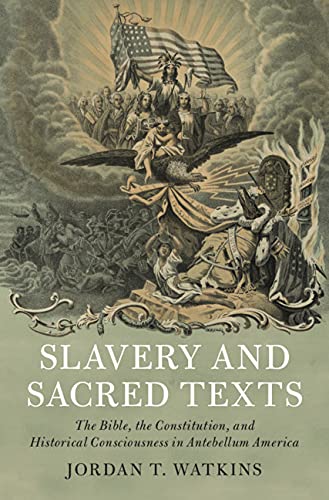
Slavery and Sacred Texts: The Bible, the Constitution, and Historical Consciousness in Antebellum America (Cambridge Historical Studies in American Law and Society)

 4.9 (117 items)
 Limited Time Sale
US$15.52 cheaper than the new price!!
Free cash-on-delivery fees for purchases over $99
Product details
| Management number | 231961723 | Release Date | 2026/06/18 | List Price | US$10.34 | Model Number | 231961723 | ||
|---|---|---|---|---|---|---|---|---|---|
| Category | |||||||||
In the decades before the Civil War, Americans appealed to the nation's sacred religious and legal texts - the Bible and the Constitution - to address the slavery crisis. The ensuing political debates over slavery deepened interpreters' emphasis on historical readings of the sacred texts, and in turn, these readings began to highlight the unbridgeable historical distances that separated nineteenth-century Americans from biblical and founding pasts. While many Americans continued to adhere to a belief in the Bible's timeless teachings and the Constitution's enduring principles, some antislavery readers, including Theodore Parker, Frederick Douglass, and Abraham Lincoln, used historical distance to reinterpret and use the sacred texts as antislavery documents. By using the debate over American slavery as a case study, Jordan T. Watkins traces the development of American historical consciousness in antebellum America, showing how a growing emphasis on historical readings of the Bible and the Constitution gave rise to a sense of historical distance. Read more
| ASIN | B095KDTSKT |
|---|---|
| XRay | Not Enabled |
| ISBN13 | 978-1108806107 |
| Language | English |
| File size | 2.3 MB |
| Page Flip | Enabled |
| Publisher | Cambridge University Press |
| Word Wise | Enabled |
| Print length | 398 pages |
| Accessibility | Learn more |
| Screen Reader | Supported |
| Part of series | Cambridge Studies in Law and Society |
| Publication date | July 1, 2021 |
| Enhanced typesetting | Enabled |
Bestseller ranking
Anesthesia Syringes & Needles



Customers who viewed this product also viewed
Antebellum




Correction of product information
If you notice any omissions or errors in the product information on this page, please use the correction request form below.
Correction Request Form